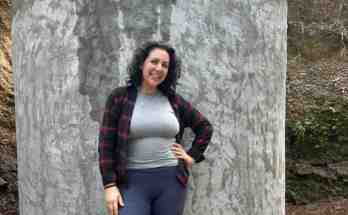
In this interview, you’ll hear from Megan Love, a Peace Corps Environment volunteer in Mexico. Megan shares what daily life looks like, the work being done, and how service has shaped their personal and professional growth. You’ll learn about housing, cultural differences, project work, language learning, and what it’s like to live and work in a new country. This interview offers a real look into Peace Corps service and what future volunteers can expect.
Volunteer Experience and Motivation
1. What do you do as a Peace Corps Environment volunteer in Mexico?
The majority of my time was spent teaching environment/English classes as an extracurricular activity for elementary and middle school students in town. I also worked at the town’s shelter for underprivileged youth to teach classes with them as well. Additionally, I worked on various projects with community members, such as reforestation, community cleanups, compost, recycling, and we painted an environmental mural!
2. Why did you decide to join the Peace Corps and serve in Mexico?
I decided to join the Peace Corps because I always wanted to do a year of volunteer work, although it ended up being 2 years in the Peace Corps. I actually applied and got accepted into the program in Peru, but it got cancelled, so I switched to Mexico’s environmental program instead. But I am so glad I switched programs because I think I enjoyed it more than I would have with the other program.

Living Arrangements and Cultural Integration
3. What is your housing like in Mexico?
I lived with a host family in my first 3 months at site, and I ended up moving into the house above their house for the rest of my 2 years. It was so convenient to have my own housing while still living on the same property as my host family. My site was very rural in a small town of 3,000 people, with not many stores/restaurants and only one supermarket (that was not very super). There was a market that came to town every Wednesday to sell produce. The food my host family made was amazing, but I am glad I could cook for myself once I moved out.
4. What moments or interactions stand out during your service?
My work with the shelter for underprivileged youth stood out to me the most because it was the most meaningful work I had done. It was shocking to see how some students had very little knowledge of the world. I keep a list of the questions they would ask me. Here are a few examples:
When I told them I was from the US, one student asked if I spoke Japanese. Another time, someone asked where I was from, and I told them to guess, and they said, “China?” Considering they had never met someone from another country with another accent, they asked me, “Why do you talk weird?” I brought another Peace Corps volunteer to class, and they asked him if he was an actor. We were working on a lesson about animals, and I asked them what animals were bigger than a sheep, and one student said a snail.

Surprises and Challenges
5. What has surprised you most about living or working in Mexico?
It was difficult working in the environmental sector in Mexico because it was not very normal for community members to be conscious about their actions towards the environment.
For example, after every community event, the streets would be full of trash because it was normalized to just throw trash on the ground instead of in trash bins. This was an issue I was working on because they only had trash bins at the park and nowhere else in town. I was trying to change the consciousness about being more thoughtful in their actions towards the environment.
We painted an environmental mural in the center of town that said “Cuidamos el Medio Ambiente” to remind people that we should take care of the environment. We also held community cleanups almost every month to clean up nature from the trash that was thrown.
Another issue was recycling, as it was hard to convince people not to throw trash on the ground; it was even harder to convince them to sort their trash into recycling.
6. What challenges have you faced in your Environment work, and how did you respond?
I had a reforestation event planned with the community’s ejido, which is a group of people who work on the environment. I was working with the leader of this group, and when it came time to plan the event, he no longer wanted to help. I was stuck with 200 trees and no one to help. So I reached out to all of my contacts, and luckily, I got around 20 people to come help plant trees. And even the ejido showed up with enough persistence.
7. What secondary projects have you worked on during your service?
In addition to environmental projects, I was continuously asked for English classes. I tried to offer as many classes as I could in addition to other projects I had going on. I also collaborated with other PCVs who were working at universities to teach their English students about the environment in Spanglish. It was fun to connect our two programs and teach about English and the environment at the same time.
I also love crocheting, so I crocheted bags with environmental materials for the university collaborations. I crocheted a bag out of recycled plastic bags, aluminum can tabs, and jean material.

Advice and Support
8. What advice would you give to future Environment volunteers in Mexico?
I would tell future Environment volunteers to think outside the box and work on any project or idea that they have in mind. Some of my best projects were just ideas that I wanted to do, and they turned out great!
Secondary projects can also be a good way to help the community in other ways while also making more connections that could help in the future.
9. How did Peace Corps training prepare you for service?
Pre-Service Training (PST) helped provide more knowledge about what projects I could do, but in reality, it didn’t prepare me for the work I would actually be doing. I spent most of my time teaching classes, which were not covered in PST. It was also difficult to work on big projects, considering we lost access to grants, so a lot of the training we received was not beneficial to the smaller projects I was working on.

Practical Tips and Language Learning
10. What would you tell future volunteers to pack—or leave behind?
I would bring more clothes for hiking and working outside, but leave behind professional clothes that I only wore in PST. For Mexico, bring a winter coat as it does get cold in winter/at night. But Mexico also has almost everything available, so you can buy any clothes, and I’d recommend bringing Cheez-Its.
11. How has language learning been for you in Mexico?
I had a good background in Spanish before coming to Mexico, so anyone wanting to join the Peace Corps Mexico should start studying ASAP. Working in a small town is difficult with limited Spanish, so studying Spanish is one of the most important things to do before arriving. I did learn a lot in my 2 years, so everyone will improve with time. For TEFL volunteers, I would say it is not as important to have a high level of Spanish, but it is still important for living in Mexico.

Social Identity
12. How has your personal identity shaped your service experience?
Being a woman in any country is difficult, but especially in Mexico as a foreigner, because I received more attention than I wanted to. Luckily, in my community, I was treated like any other community member, especially because I always had my guard dog with me to protect me. Overall, my personal identity did not change my experience too much, but I did learn a lot about the differences between Mexico and the USA.
13. Did your identity lead to specific challenges or situations?
In general, I don’t think I was treated any differently for my personal identity, although it was difficult working as a woman in a field that is mostly male dominated. For example, the ejido did not want to work with me and they wouldn’t invite me to go to work with them on reforestations unless their female counterpart also went with us. It was difficult to work around this but we overcame this issue over time.
14. What advice do you have for volunteers who share your identity?
Even if it is difficult at times, I think it is important to continue working in the same way you would otherwise. If it is too difficult to work with people who do not treat everyone the same, then find someone else who does want to work with you.

Final Thoughts
15. What final advice would you share with future volunteers?
Have fun! Travel! I loved my time in Mexico, and I will definitely be back to visit. Also, keep track of how many tacos/tamales you eat. I wish I knew how many tamales I ate in 2 years.
Are you thinking about joining the Peace Corps? If you’re curious about service and ready for something new, apply today. Like Megan, you can live abroad, work with communities, and grow in ways you didn’t expect. Apply to the Peace Corps and take the next step.
The content of this post does not necessarily reflect the views of the U.S. Government, the Peace Corps, or Mexico Government.