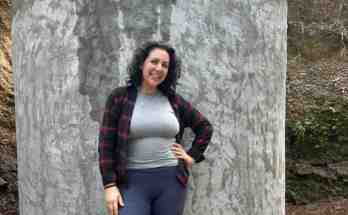
In this interview, you’ll hear from Blake Knipple, a Peace Corps Environment volunteer in Mexico. Blake shares what daily life looks like, the work being done, and how service has shaped their personal and professional growth. You’ll learn about housing, cultural differences, project work, language learning, and what it’s like to live and work in a new country. This interview offers a real look into Peace Corps service and what future volunteers can expect.
Volunteer Experience and Motivation
1. What do you do as a Peace Corps Environment volunteer in Mexico?
My role as a Peace Corps Environment volunteer in Mexico has been focused mainly on environmental education, environmental event planning, and conservation projects.
The reason that a volunteer was requested in my community was to support conservation efforts surrounding the native plant species Dasylirion Acrotrichum or colloquially known as Cucharilla or Sotol. This plant is used in traditional religious ceremonies in my community and in numerous communities in the state of Querétaro with Otomí heritage.
My job, along with my site partner, has been to educate the individuals who utilize the plant on the legal requirements to be able to harvest it, as well as co-facilitate plant sampling procedures, so the communities and Mexican government know how many specimens exist in the wild.
The other projects I work on are under the umbrella of environmental education. I work in three different local schools, ranging from a kindergarten to a K-12 school, and teach kids about different environmental topics such as solid waste management, composting, gardening, and the importance of pollinators. The physical projects associated with these themes include supporting efforts to start school gardens, installing school compost systems, and planting pollinator gardens.
I also collaborate with local environmental groups to carry out environmental-themed events such as trash pickups alongside the river that runs through my community, and support larger-scale events.
2. Why did you decide to join the Peace Corps and serve in Mexico?
I decided to join the Peace Corps because it was the perfect combination of what I was looking for after graduating from college: a way to give back and do some sort of service, and a way to live abroad and improve my second language skills.
I studied Environmental Engineering at the Colorado School of Mines and was part of a scholarship group called the Harvey Scholars. The focus of this group was to support college students who are dedicated to serving their community and paying forward all of the support they have received throughout their academic careers and their lives in general.
The idea of “paying it forward” is something that I have wanted to incorporate into my career in the future through using my environmental engineering skills to support underserved communities. Serving in the Peace Corps seemed like an amazing opportunity to do just that. I also wanted to do something related to my degree, so serving in the environmental sector made a lot of sense to me. In my freshman year of college, I joined the Peace Corps Prep program at my school, so service in the Peace Corps had been on my mind for a while before applying.
I also love traveling and exploring different parts of the world. I had studied abroad twice during college, and I wanted to live abroad for an extended period of time. I wanted a Spanish-speaking country because I have been studying Spanish for almost 8 years now, and I wanted an immersion experience to become more proficient. It has always been a goal of mine to get to a level of Spanish where I can use it in my future career as an engineer, and I knew living in a Spanish-speaking country for a little over two years would help me achieve that goal.
As soon as I saw that Mexico had an environmental program and that the start date was only a couple of months after I graduated, I knew I wanted to apply, and here I am!

Living Arrangements and Cultural Integration
3. What is your housing like in Mexico?
For my entire time here in Mexico, I have been living with a host family. During Pre-Service Training (PST), I lived with a host family in the city of Querétaro, and now I am living with a different host family at my site in Tequisquiapan.
I initially thought that I would live with them for just the first year of service and then move to independent housing, but I have grown quite fond of them and really enjoy living with them. I have two host parents and a host brother, and they not only were a huge part of helping me integrate into the site, but also have become close friends and people I can rely on during the difficult times of service.
I have my own bedroom, and we all share a bathroom. Initially, they made my food, and I would pay them for it as part of the rent, but now I cook for myself and only pay them the cost of renting the room.
My site is considered semi-urban, and the municipality I live in has around 72,000 people. My site is one of the neighborhoods in the center, and likely has around 10,000 people, but it is still much larger than the majority of my fellow environmental volunteers’ sites. Since I live in a semi-urban area, I have many of the daily comforts and opportunities that I had in the United States. There are, of course, lots of traditional Mexican food places to eat, but there are also a handful of American-style restaurants and food chains that are common in the US.
4. What moments or interactions stand out during your service?
The interactions that have stood out most to me during my service have been small moments that aren’t necessarily related to my daily work. I remember talking to many RPCVs (Returned Peace Corps Volunteers) before applying for the Peace Corps, and almost all of them talked about how the relationships that you build with people in your community are the most impactful part of your service.
I remember thinking, sure, but I still want to do some cool projects and build some things that will help my community even after I am gone. Even with some of the more technical accomplishments of my service thus far, the biggest moments have been family dinners with my host family every Wednesday, spending Christmas day with my local friends, and saying hi to the kids I teach when I see them outside of school.

Surprises and Challenges
5. What has surprised you most about living or working in Mexico?
One thing that surprised me right from the beginning was the cultural difference surrounding time and meetings. I was used to a very fast-paced life during college, with classes, meetings, and clubs. I was used to having very concise meetings with bosses and fellow students, but here, there is a more relaxed culture when you meet with people. A meeting said to start at 2 could start right at 2, 2:30, or 3. Where in the US people might think that would be rude, but here it is just part of the culture. Especially since most volunteer sites are in smaller towns where this phenomenon is even more pronounced than in the cities.
6. What challenges have you faced in your Environment work, and how did you respond?
One challenge of the environmental work that I am doing, specifically in terms of the conservation efforts, includes the lack of economic support. Since USAID no longer exists, we have had to come up with new ways to fund bigger projects.
Building relationships
One of the main goals that my government counterpart has is to install a greenhouse in my community with the purpose of propagating the cucharilla plant so that when plants in the wild are harvested, we can plant new ones in their place. Sadly, there has been little success in finding the economic means to carry out this project, especially the cost of paying for land and paying for someone to work to maintain the plants.
Because of this, my focus has shifted from the creation of a new greenhouse to creating connections with institutions that already have functioning greenhouses where we could potentially start propagating the plant. I have overcome this challenge by shifting my focus from creating something in my community to building relationships with people and institutions that could support our conservation efforts.
Being the First
Another challenge has been being the first volunteer at my site. For the first couple of months of my service, a big part of my job was just introducing myself to community members and explaining the purpose of the Peace Corps. A lot of people thought that I was just another English teacher at the local bilingual school, or that I was a missionary.
It took my community a while to understand that the main purpose of my role is to help support local environmental projects. The way that I overcame this was by always having patience and explaining the Peace Corps to people I met, and trying to publicize environmental events such as reforestation and trash pick-ups that I helped organize. Because of the work I’ve put in thus far, the next volunteer that comes to my site will hopefully have an easier time starting up environmental projects.
7. What secondary projects have you worked on during your service?
The main secondary project that I have worked on during my service has been providing free English classes to individuals in my community. There are already bilingual schools and businesses that provide private language classes, but the steep cost doesn’t allow the majority of my community to pursue learning a second language. Because of this (and because I was asked probably 15 to 20 times if I would give English classes to community members), I decided to start giving free English classes in the local library.
I currently have two classes, for kids ranging from 7-10 years old and 11-14 years old, every Wednesday. In total, I teach about 40 students. My students are at the A1 level, so we have mostly been focusing on building vocabulary and being able to have simple conversations in English. In order to try to make this project more sustainable, I invited other English speakers to also give free classes in the library. One community member agreed and gave classes to the parents of my students at the same time as my class. Moving forward, I hope to integrate more community members into this project so it continues even after I finish my service.

Advice and Support
8. What advice would you give to future Environment volunteers in Mexico?
I think that one piece of advice I would give future volunteers in the environmental sector here is to try to have experience with environmental education and working with kids. For myself and many other people in my cohort, some of the best counterparts and relationships that we have are with the local schools. They are usually very open to collaborating, and it is a great way to connect with a large number of people in your community, increasing the impact of your service.
Before coming to Mexico, I had very little experience in the classroom and working with kids. I have learned a lot and adapted to working in the schools, and having prior experience with environmental education would have helped me feel more confident and prepared for this role.
9. How did Peace Corps training prepare you for service?
Pre-Service Training
During PST, we learned a lot about institutional counterparts, general environmental challenges, and opportunities here in Mexico, and had a lot of Spanish training. I think the Spanish classes were definitely my favorite part and what I was most excited about because I knew I would be speaking in Spanish all of the time at the site.
Another huge part of PST that has had a large impact on my service was building relationships with the other volunteers. During the hard parts of service, having people who understand what you’re going through and are living it alongside you makes a huge difference. During PST, I made a lot of close friends with people in my cohort, and their support has made my service what it is today.
Early In-Service Training
During EIST, we had more technical specific trainings such as biodiversity monitoring, rainwater capture cisterns, and gardening and compost. Since each volunteer’s experience is different, some of these technical trainings were more useful than others.
For me, for example, the biodiversity monitoring helped me better understand the conservation and monitoring efforts that I help lead for the cucharilla. The gardening and compost sessions also gave me more confidence when starting up school composts and school gardens at my site.

Practical Tips and Language Learning
10. What would you tell future volunteers to pack—or leave behind?
Environmental volunteers definitely need to be ready to be outside a lot. In my case, my hiking boots, long-sleeve shirts, and work pants have been essential when doing field work in the heat.
Another thing that I use all the time are my headphones. If you have noise-cancelling ones, even better! The culture around noise is different here than in the US, and especially during the holiday season, families like to get together and stay up very late while dancing and listening to music. Being able to tune that out every once in a while and get some good sleep is very nice.
11. How has language learning been for you in Mexico?
Language learning has been pretty straightforward since I started service with an intermediate level of Spanish. My language background includes 4 years of high school Spanish, 8 months of study abroad during college in Spanish-speaking countries, and 2 years of private language classes.
For me, coming in with an intermediate language level has definitely helped my service. That isn’t to say that a high Spanish level is a requirement; it just definitely makes the process of integrating and starting projects easier at the beginning of service.
Since my goal is to get to an advanced level, I have been studying Spanish during service as well. During PST, we were given a Spanish grammar book, and I have been working through those exercises as needed. I also have continued to take Spanish classes with one of the language instructors who taught us during PST. Each week, I give her one English class, and she gives me one Spanish class.

Social Identity
12. How has your personal identity shaped your service experience?
Being a male has definitely been a privilege, as I don’t deal with the same unwanted attention as some female volunteers often do. Being in my early twenties and physically able to do manual labor and long days out doing field work has also been helpful in my role.
As a gay man, I have felt uncomfortable at some points in my service, as community members like to joke about finding me a Mexican girlfriend so I don’t leave when my service is finished. They don’t mean any harm by it, but I do keep that part of my identity to myself because I don’t want to create problems or make it harder for me to work with my community on environmental projects. It doesn’t feel great, but I do have some connections with people with whom I can confide and share that side of myself with.
I grew up in the Lutheran church, so I came in familiar with the principles of Catholicism and Christianity as a whole. Most Mexicans do identify as Catholic, and I haven’t been treated differently for not sharing the same beliefs as them. It has actually led to a lot of interesting conversations about faith and how faith looks in different parts of the world.
13. Did your identity lead to specific challenges or situations?
I think my identity as a gay man has just led me to not be completely open with community members on certain topics. Other than that, it hasn’t been a particular challenge.
14. What advice do you have for volunteers who share your identity?
For other male volunteers, it is very important that, when you have the chance, you support the female volunteers. They will likely face more hardships because of their gender, so using your privilege as a male can go far. This could be as simple as making sure a female volunteer’s voice is heard in a community meeting or inviting a female volunteer into a conversation that they weren’t originally involved in. What this looks like is different for everyone, but it is something important to be mindful of nonetheless.
For other queer volunteers, my suggestion is finding people you can confide in and people who you know will be open-minded about sexual orientation before sharing that with others.

Impact of Media and Final Thoughts
15. If you share content online, how has that shaped your service?
I have a personal blog where I upload posts monthly. The purpose of the blog is mainly just to update family and friends back home about all of the stuff I’m doing, but it has also been a great way to take a step back and reflect on all of the experiences I have been having. Here’s the link if you want to take a look.

Blake’s Peace Corps Service is a personal blog by Blake, an Environment volunteer in Querétaro, Mexico (2024–2026), focused on conserving the native cucharilla, school-based environmental education, and community outreach. You can read more HERE!
16. What final advice would you share with future volunteers?
I think the biggest piece of advice I would give future volunteers is not to have expectations for your service. Your service is dependent on so many different variables that you don’t have control over. If you come into service with ideas for projects and accomplishments, then you aren’t being true to the sustainable community development philosophy of the Peace Corps.
The best thing you can do is prepare for your placement by doing research beforehand (reaching out to current volunteers is a great way to do this) on the country, culture, and language. After that, just strap in and get ready to enjoy the ride.
Are you thinking about joining the Peace Corps? If you’re curious about service and ready for something new, apply today. Like Blake, you can live abroad, work with communities, and grow in ways you didn’t expect. Apply to the Peace Corps and take the next step.
The content of this post does not necessarily reflect the views of the U.S. Government, the Peace Corps, or Mexico Government.